
When a C-section scar doesn't heal the way it should
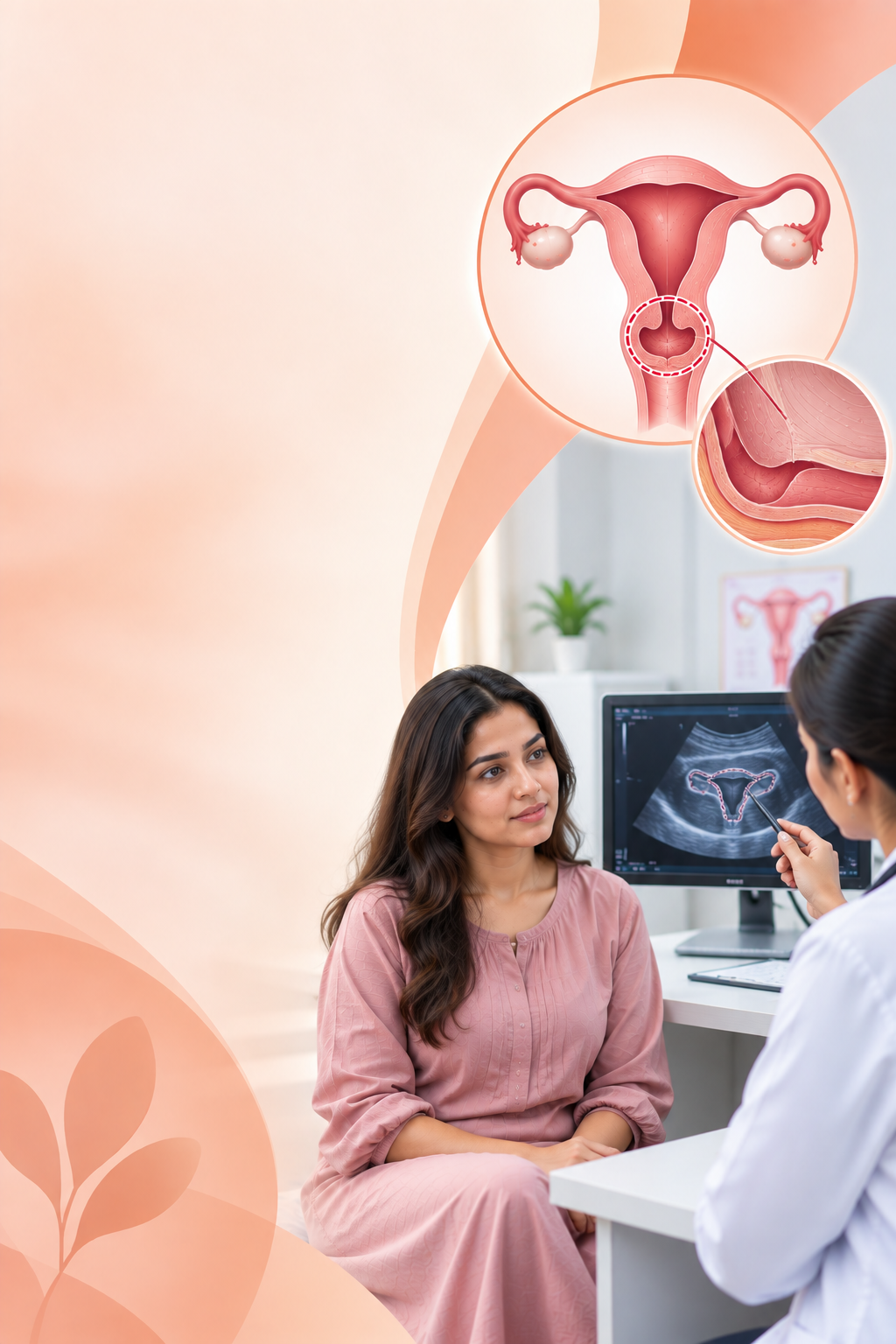
An isthmocele — also called a cesarean scar defect or "niche" — is a pouch-like gap that forms in the uterine wall at the site of a previous C-section incision. It develops when the scar doesn't heal completely, leaving a small defect where menstrual blood can collect.
Not every isthmocele causes symptoms, but when it does, the trapped blood and delayed uterine emptying can lead to prolonged spotting, pelvic pain and, in some cases, difficulty conceiving. Diagnosis and treatment are personalised to the size of the defect and your symptoms.
Previous C-Section Scar
Scar Defect (Isthmocele)
Symptoms & When to Seek Evaluation
If you've had a previous C-section and notice any of these, an isthmocele evaluation is worth considering.
Prolonged spotting after periods (brown discharge)
Intermenstrual spotting or irregular bleeding
Chronic pelvic pain or period pain
Pain during intercourse
Secondary infertility after a C-section
Difficulty with cervical mucus or embryo transfer
Periods that feel unusually prolonged
Recurrent pelvic infections or discomfort
Worth an evaluation if you have had a C-section and notice:
Brown spotting lasting more than 2–3 days after your period ends, unexplained pelvic pain, or difficulty conceiving without another clear cause. These are the most common signs of an isthmocele and are easily assessed with imaging.
How Isthmocele Is Evaluated
A focused, step-by-step assessment to confirm the diagnosis and measure the defect precisely.
Detailed History
Review of your C-section history, symptom pattern and any fertility concerns to guide the evaluation.
Transvaginal Ultrasound
The first-line imaging test to detect and measure the scar defect and assess the residual muscle thickness.
Saline Infusion Sonohysterography
A saline-enhanced ultrasound that outlines the niche more clearly, helping determine its exact size and depth.
Hysteroscopy (If Needed)
A direct camera-guided view inside the uterine cavity to confirm findings and plan the most suitable repair.
Personalised Isthmocele Treatment & Repair
The right repair approach depends on defect size, remaining muscle thickness, symptoms and your fertility goals.
Hysteroscopic Resection
A camera-guided procedure through the vagina and cervix that smooths the edges of the niche, improving drainage and symptoms.
- Best for adequate residual muscle thickness
- No external incision
- Quick recovery, often day-care procedure
Laparoscopic Repair
Performed through small abdominal incisions to excise the defect and rebuild a stronger, well-healed uterine wall.
- Suited to larger or deeper defects
- Strengthens thin residual muscle
- Often recommended before future pregnancy
Vaginal Repair
An alternative surgical route to correct the defect without an abdominal incision, chosen based on anatomy and defect location.
- No visible abdominal scar
- Shorter hospital stay
- Selected on a case-by-case basis
Not every isthmocele requires surgery — mild, symptom-free defects may simply be monitored. Your specialist will recommend treatment only when it's genuinely needed.
Our Specialists
Experienced gynecologic surgeons focused on accurate diagnosis and lasting relief.

Dr. Vasundhari M.J.
MBBS, DGO · KMC 27763Specialist gynecologist experienced in diagnosing and surgically repairing cesarean scar defects for symptom relief and fertility.

Dr. Apoorva P.
MS OBG, FRM · KMC 121086Trained in reproductive medicine and minimally invasive gynecologic surgery, with a focus on fertility-conscious scar repair.