
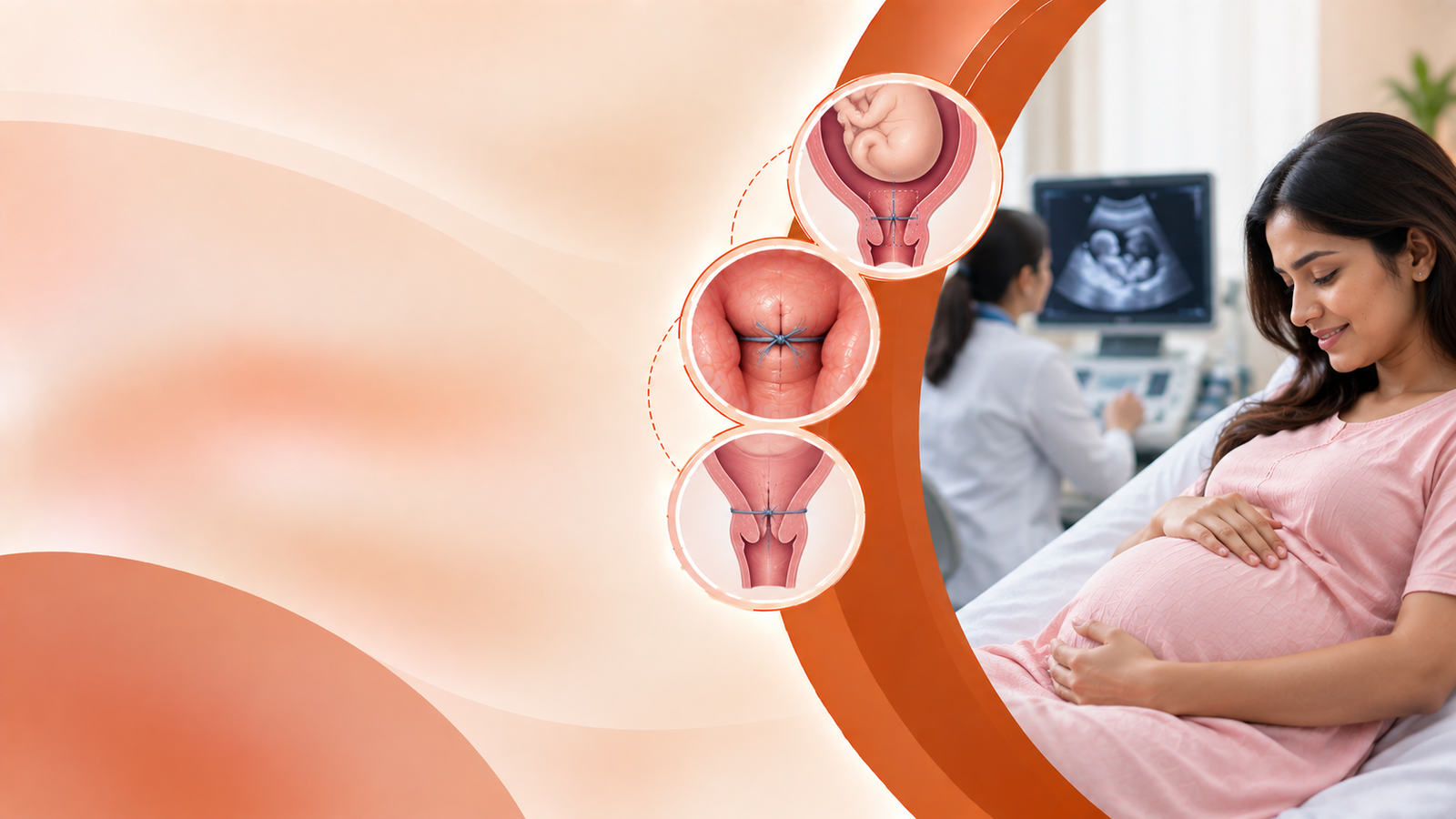
Cervical Cerclage — A Stitch That Helps Your Pregnancy Go the Distance
Specialised care to help prevent preterm birth in pregnancies affected by cervical insufficiency — guided by Dr. Vasundhari and Dr. Apoorva at Sanjeevini Maternity & Fertility Centre, Raichur.
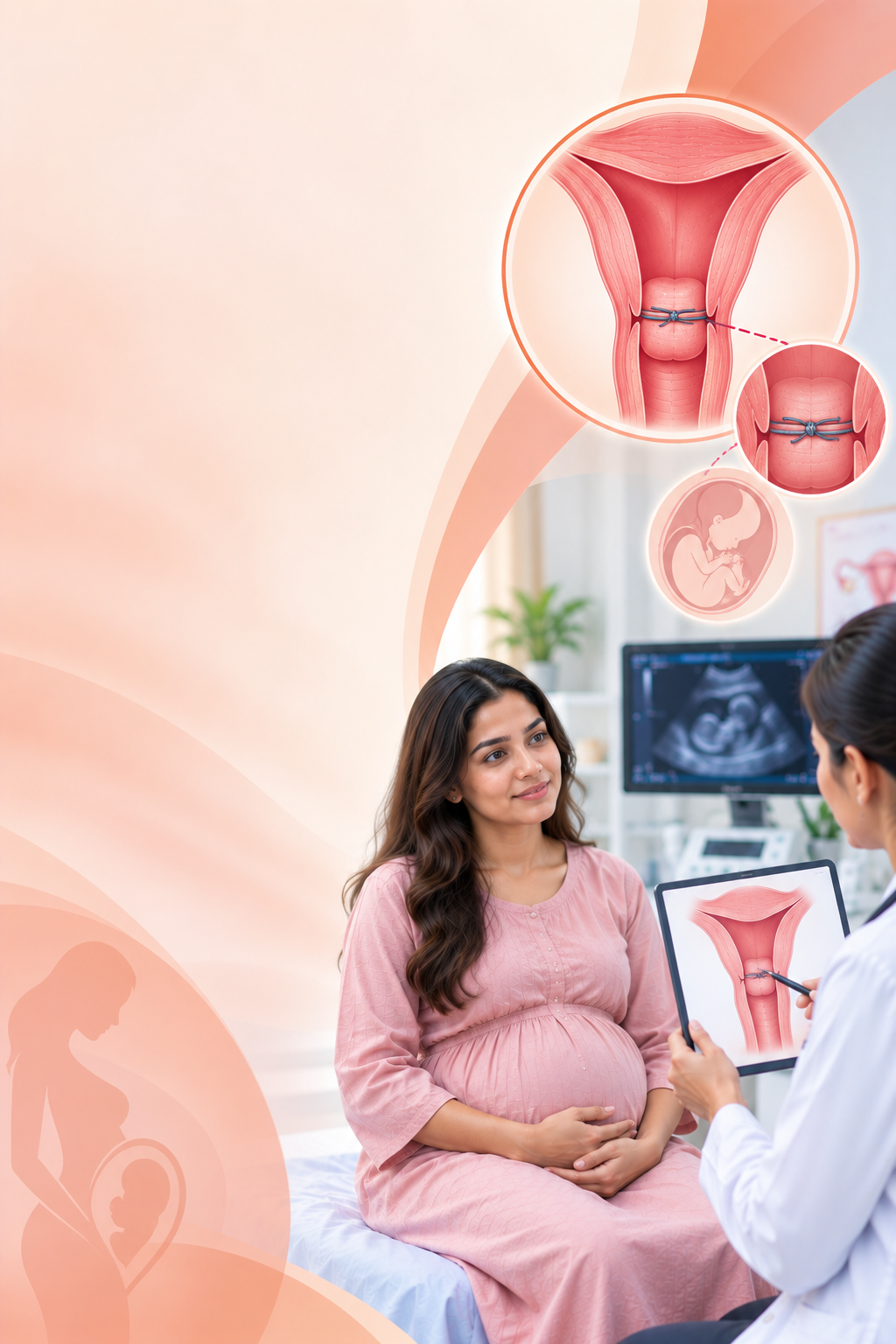
A stitch that helps your pregnancy go the distance
Cervical cerclage is a minor surgical procedure in which a strong stitch is placed around the cervix to keep it closed during pregnancy. It's used when the cervix is weak (cervically insufficient) or opening too early, which can otherwise lead to miscarriage or preterm birth.
The procedure is quick, typically performed vaginally under anaesthesia, and is usually followed by close monitoring for the rest of the pregnancy. At Sanjeevini Maternity & Fertility Centre, the decision, timing and technique are personalised to your obstetric history.
When Might It Be Recommended?
Your obstetrician may recommend cervical cerclage based on your history and current pregnancy findings.
History of Second-Trimester Loss
One or more previous pregnancy losses between 14–24 weeks without an obvious cause, suggesting cervical weakness.
Previous Preterm Birth
A history of spontaneous preterm birth, especially when linked to painless cervical dilation in an earlier pregnancy.
Short Cervix on Ultrasound
A cervical length measured shorter than expected on routine or follow-up ultrasound during this pregnancy.
Diagnosed Cervical Insufficiency
A confirmed diagnosis of a structurally weak cervix, sometimes related to prior cervical surgery or congenital factors.
Multiple Pregnancy (Twins/Triplets)
In select cases, higher-order pregnancies with additional risk factors for early cervical change may be considered.
Painless Cervical Dilation
Cervical opening detected on examination in the current pregnancy without contractions or obvious cause.
Your Cervical Cerclage Journey
From evaluation to the day of the procedure, here's how we guide you through each step.
Risk Assessment & History Review
Your obstetric history, prior losses or preterm births, and current pregnancy findings are reviewed to decide whether cerclage is appropriate.
Ultrasound Evaluation
Cervical length and fetal wellbeing are checked by ultrasound to confirm timing and rule out other complications before the procedure.
Pre-Procedure Preparation
Routine blood tests and anaesthesia fitness checks, along with a clear explanation of the procedure and what to expect on the day.
The Procedure
Performed vaginally under anaesthesia in around 30 minutes, placing a supportive stitch around the cervix to help keep it closed.
Short Observation Stay
A brief hospital stay for monitoring before you're discharged home with clear guidance on activity and warning signs.
Stitch Removal Near Term
The cerclage is typically removed around 36–37 weeks, or earlier if labour begins or complications arise.
Aftercare & Pregnancy Monitoring
Close, regular follow-up continues through the rest of your pregnancy after the cerclage is placed.
Regular Check-Ups
Scheduled visits to monitor cervical length and overall pregnancy progress.
Activity Guidance
Personalised advice on rest, activity levels and pelvic rest based on your risk profile.
Progesterone Support
Supplementary progesterone may be prescribed alongside cerclage in select cases to further support the pregnancy.
Delivery Planning
Timely stitch removal and a clear plan for labour and delivery as your pregnancy nears term.
Contact your specialist promptly if you notice:
Regular contractions, pelvic pressure, vaginal bleeding, fluid leakage, or fever after cerclage placement. Prompt evaluation helps protect both you and your pregnancy.
Our Specialists
Experienced obstetricians dedicated to helping high-risk pregnancies reach term safely.

Dr. Vasundhari M.J.
MBBS, DGO · KMC 27763Specialist obstetrician with extensive experience managing high-risk pregnancies, including cervical insufficiency and preterm labour prevention.

Dr. Apoorva P.
MS OBG, FRM · KMC 121086Trained in reproductive medicine, Dr. Apoorva provides close monitoring and personalised care throughout high-risk pregnancies.