
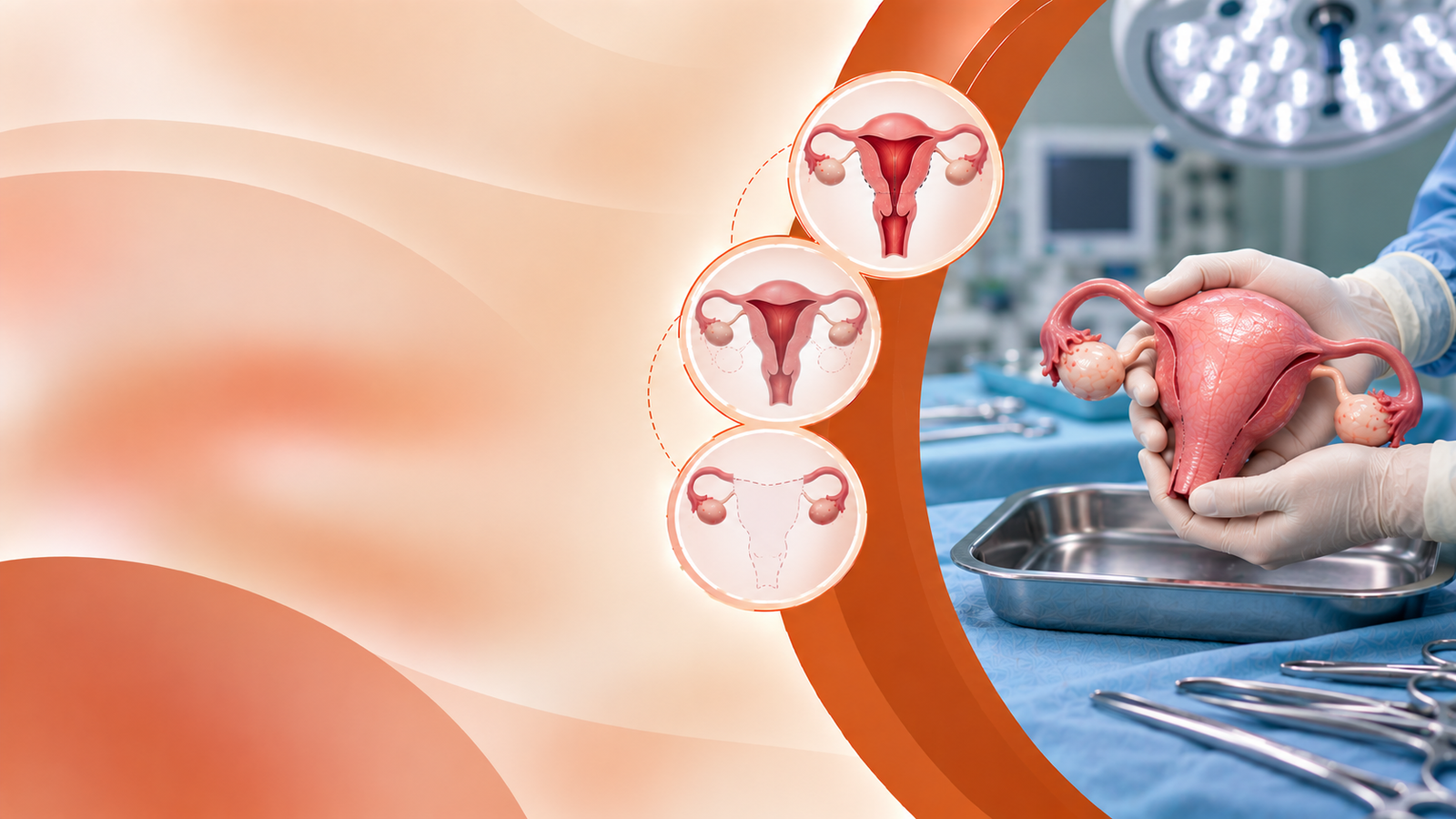
Abdominal & Vaginal Hysterectomy — Safe, Personalised Surgical Care
Surgical removal of the uterus, planned around your anatomy and diagnosis — expert care from Dr. Vasundhari and Dr. Apoorva at Sanjeevini Maternity & Fertility Centre, Raichur.
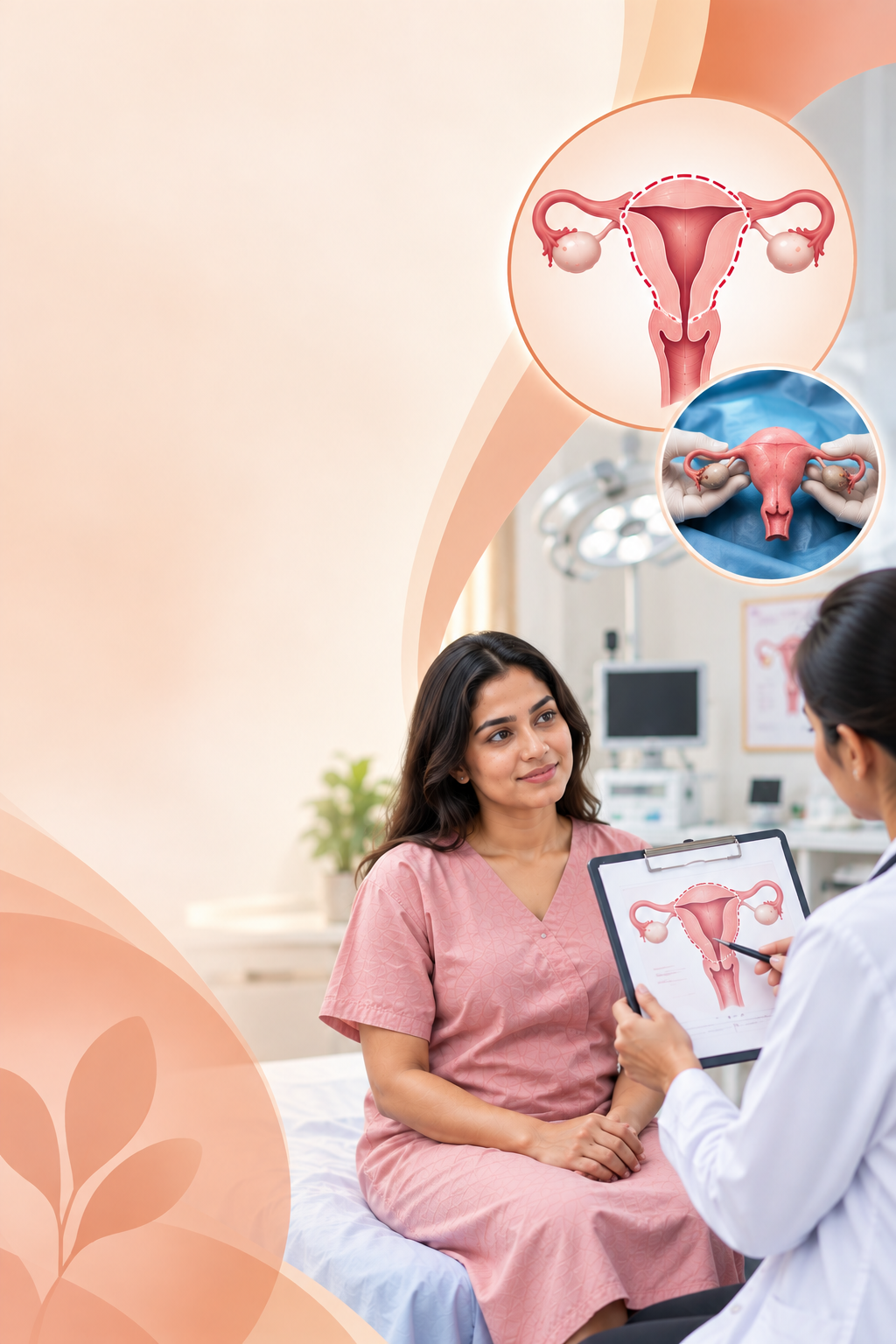
Surgical removal of the uterus, done the right way
A hysterectomy is the surgical removal of the uterus, recommended when other treatments haven't relieved conditions such as fibroids, abnormal bleeding, adenomyosis, prolapse or certain cancers. It permanently ends menstruation and pregnancy.
At Sanjeevini Maternity & Fertility Centre, the approach is chosen individually — abdominal or vaginal — based on your anatomy, medical history and the underlying condition, always aiming for the safest and least invasive route.
Abdominal vs Vaginal Hysterectomy
Both approaches remove the uterus — the difference lies in the surgical route and what it means for recovery.
Abdominal Hysterectomy
Performed through an incision in the lower abdomen, giving direct access to the uterus and surrounding structures.
- Best for larger fibroids or an enlarged uterus
- Allows thorough assessment of pelvic organs
- Preferred when cancer is suspected
- Hospital stay of around 3–5 days
Vaginal Hysterectomy
Performed entirely through the vaginal canal with no external incision, often the preferred option when suitable.
- No visible abdominal scar
- Shorter hospital stay, often 1–3 days
- Faster recovery and less post-op pain
- Well suited for uterine prolapse cases
When Might Hysterectomy Be Recommended?
Your specialist may suggest hysterectomy after other treatments haven't provided lasting relief from these conditions.
Large or Multiple Fibroids
Fibroids too large or numerous for myomectomy, or causing symptoms that haven't responded to other treatment.
Abnormal Uterine Bleeding
Heavy or irregular bleeding that hasn't improved with medication or hormonal management.
Adenomyosis
A thickened, painful uterus caused by uterine lining tissue growing into the muscle wall.
Uterine Prolapse
The uterus slipping into or beyond the vaginal canal due to weakened pelvic support, often treated vaginally.
Chronic Pelvic Pain
Persistent pelvic pain with no other effective treatment, significantly affecting quality of life.
Gynecologic Cancer or Precancer
Confirmed or suspected cancer of the uterus, cervix or ovaries requiring surgical removal as part of treatment.
Your Surgery Journey & Recovery
From first consultation to full recovery, here's how we guide you through every step.
Consultation & Diagnosis
A thorough examination, ultrasound and relevant tests to confirm the diagnosis and determine whether an abdominal or vaginal approach is best.
Pre-Surgical Preparation
Blood work, anaesthesia fitness assessment, and a detailed discussion of what the surgery involves and what to expect afterward.
The Surgery
Performed under anaesthesia using the safest route for your case, typically lasting one to two hours.
Hospital Stay
Around 3–5 days for abdominal hysterectomy, or 1–3 days for vaginal hysterectomy, with close post-operative monitoring.
Recovery at Home
Most women resume light activity within 2–4 weeks and full activity within 6 weeks, depending on the surgical approach used.
Follow-Up Care
Scheduled reviews to confirm healing and discuss any hormonal or menopausal changes, with ongoing support as needed.
Our Specialists
Experienced surgeons committed to safe, compassionate hysterectomy care.

Dr. Vasundhari M.J.
MBBS, DGO · KMC 27763Specialist gynecologist with extensive experience in both abdominal and vaginal hysterectomy procedures for a wide range of gynecologic conditions.

Dr. Apoorva P.
MS OBG, FRM · KMC 121086Trained in reproductive medicine and gynecologic surgery, focused on individualised surgical planning and compassionate patient care.