
What Is Embryo Freezing in Raichur?
Embryo freezing, also called embryo cryopreservation or embryo vitrification, is the process of preserving embryos created through IVF or ICSI at ultra-low temperatures for future use. Using a rapid-cooling technique called vitrification, embryos are frozen at -196°C in liquid nitrogen within minutes, preventing ice crystal formation and preserving their structure and developmental potential.
This allows extra healthy embryos from an IVF cycle to be stored safely for later use, so you don't need to repeat the entire stimulation and retrieval process for a future pregnancy attempt. At Sanjeevini Hospital, our embryology team manages every stage with strict laboratory protocols and continuous storage monitoring.
At a Glance
- 01Embryos are graded and selected based on quality after fertilisation
- 02Vitrification freezes embryos within minutes, avoiding ice damage
- 03Frozen embryos are stored in secure, monitored cryotanks
- 04Embryos can be thawed and transferred in a future FET cycle
Who Should Consider Embryo Freezing in Raichur?
Embryo freezing is recommended in many different fertility treatment situations. Here are some of the most common scenarios our specialists see.
Surplus Embryos From IVF
When an IVF cycle produces more good-quality embryos than needed for one transfer, extras are frozen for future attempts.
Risk of OHSS
If ovarian stimulation raises the risk of ovarian hyperstimulation syndrome, freezing all embryos allows the body to recover before transfer.
Before Cancer Treatment
Couples facing chemotherapy or radiation can freeze embryos beforehand to protect future fertility.
Uterine Lining Not Ready
When the endometrium isn't optimally prepared during a fresh cycle, freezing embryos allows a better-timed transfer later.
Genetic Testing (PGT)
Embryos undergoing preimplantation genetic testing are frozen while results are awaited before selecting the healthiest one to transfer.
Planning Future Siblings
Couples who wish to expand their family later can preserve embryos from a successful cycle for a future sibling attempt.
How Embryo Freezing Works
A step-by-step look at the embryo freezing process at Sanjeevini Hospital, from fertilisation to secure long-term storage.
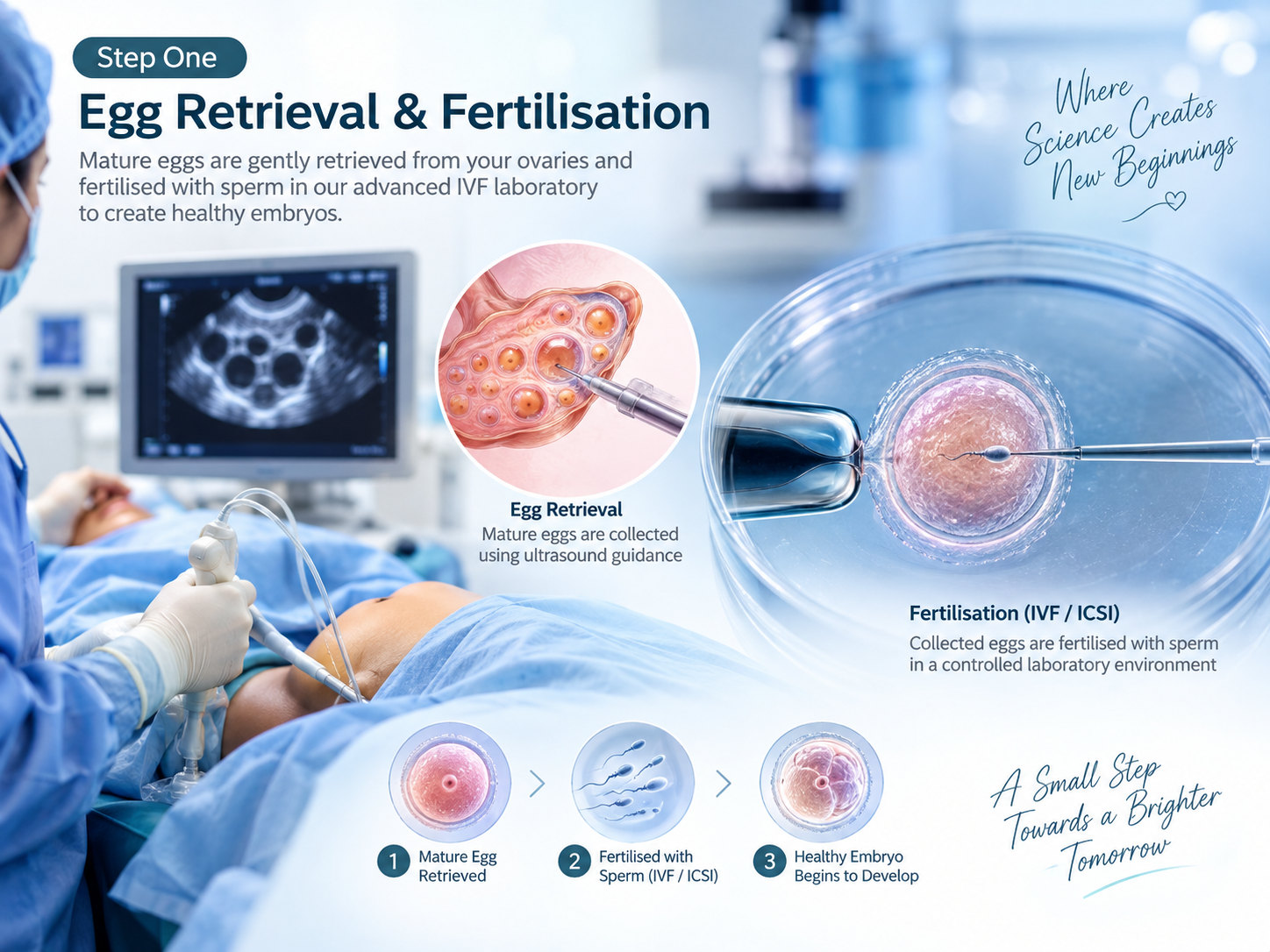
Egg Retrieval & Fertilisation
Eggs retrieved during an IVF cycle are fertilised in the lab with sperm, using conventional IVF or ICSI, to begin embryo development.
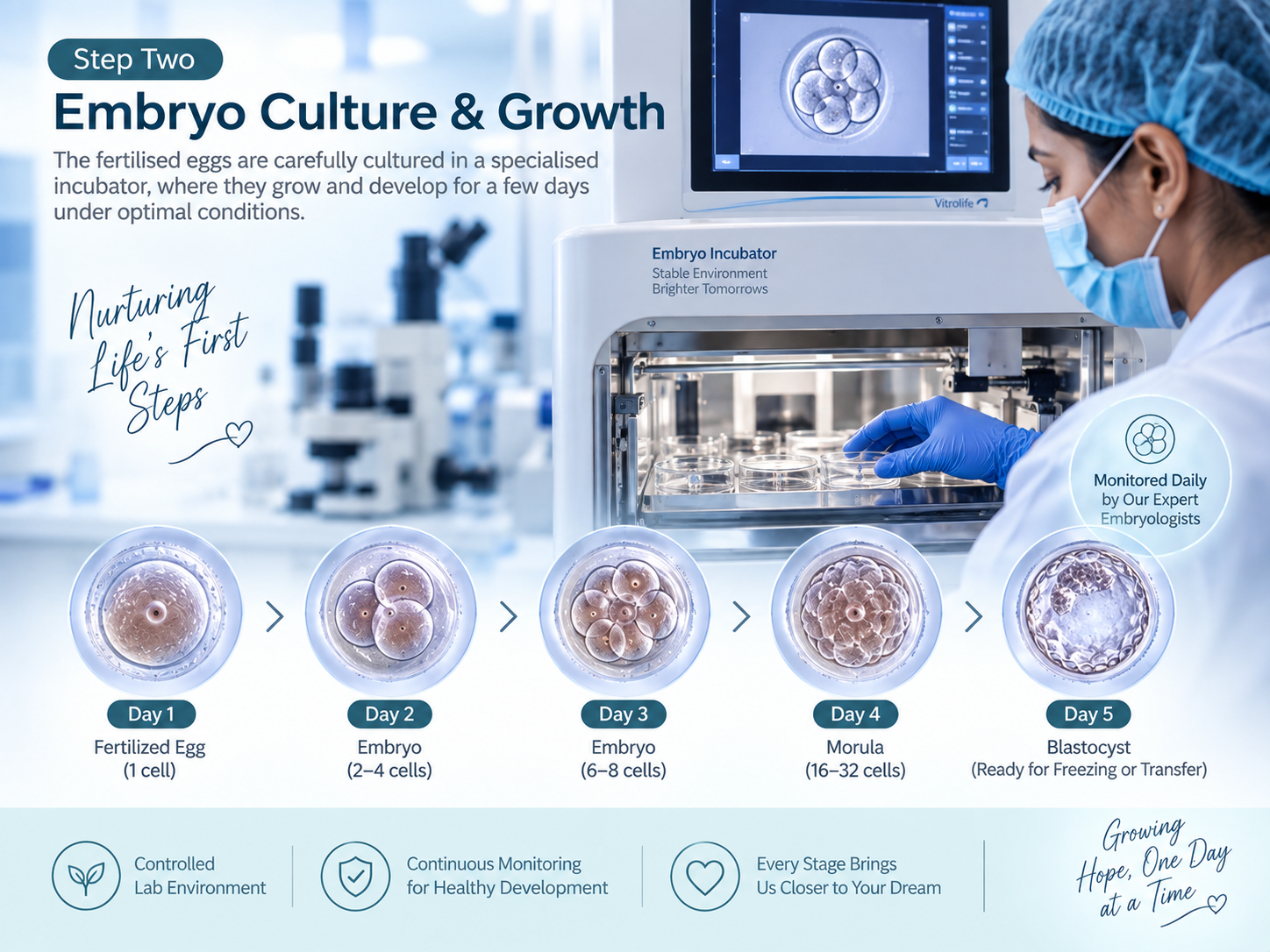
Embryo Culture & Growth
Fertilised eggs are cultured in specialised incubators for 3–6 days, allowing our embryologists to monitor development up to the blastocyst stage.
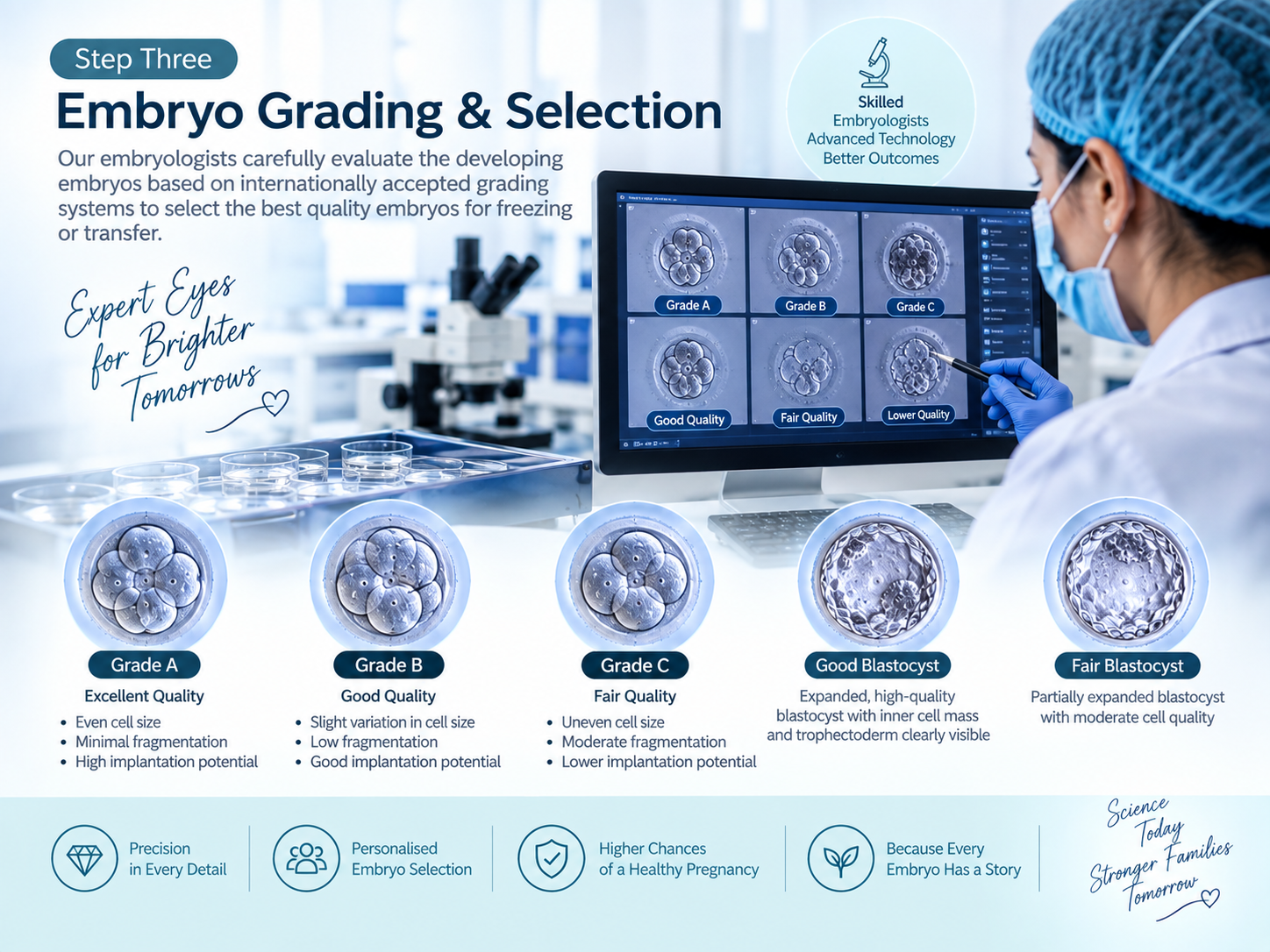
Embryo Grading & Selection
Embryos are carefully graded on their cell structure and growth pattern, so our team can identify the healthiest embryos for freezing or transfer.
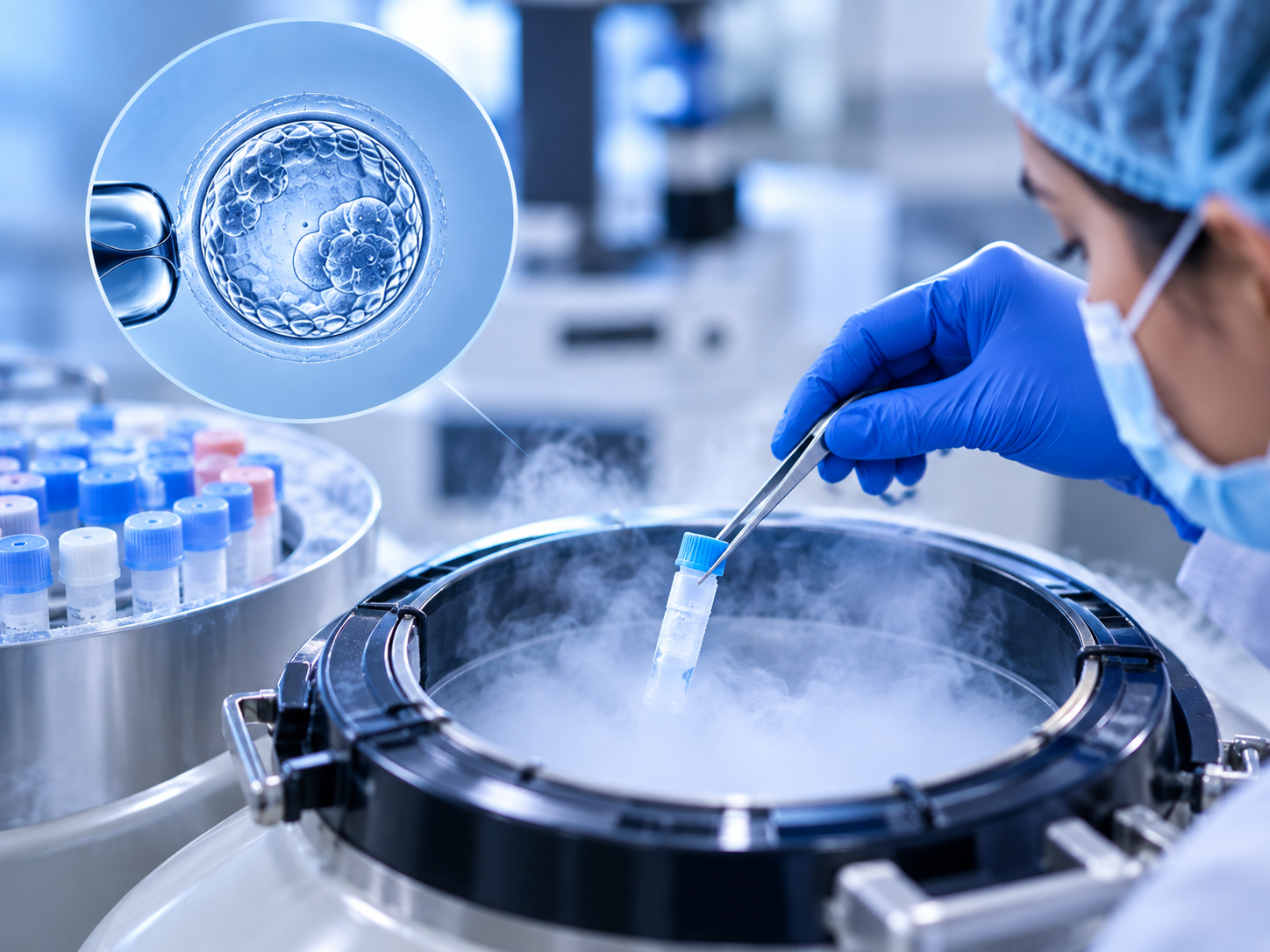
Vitrification
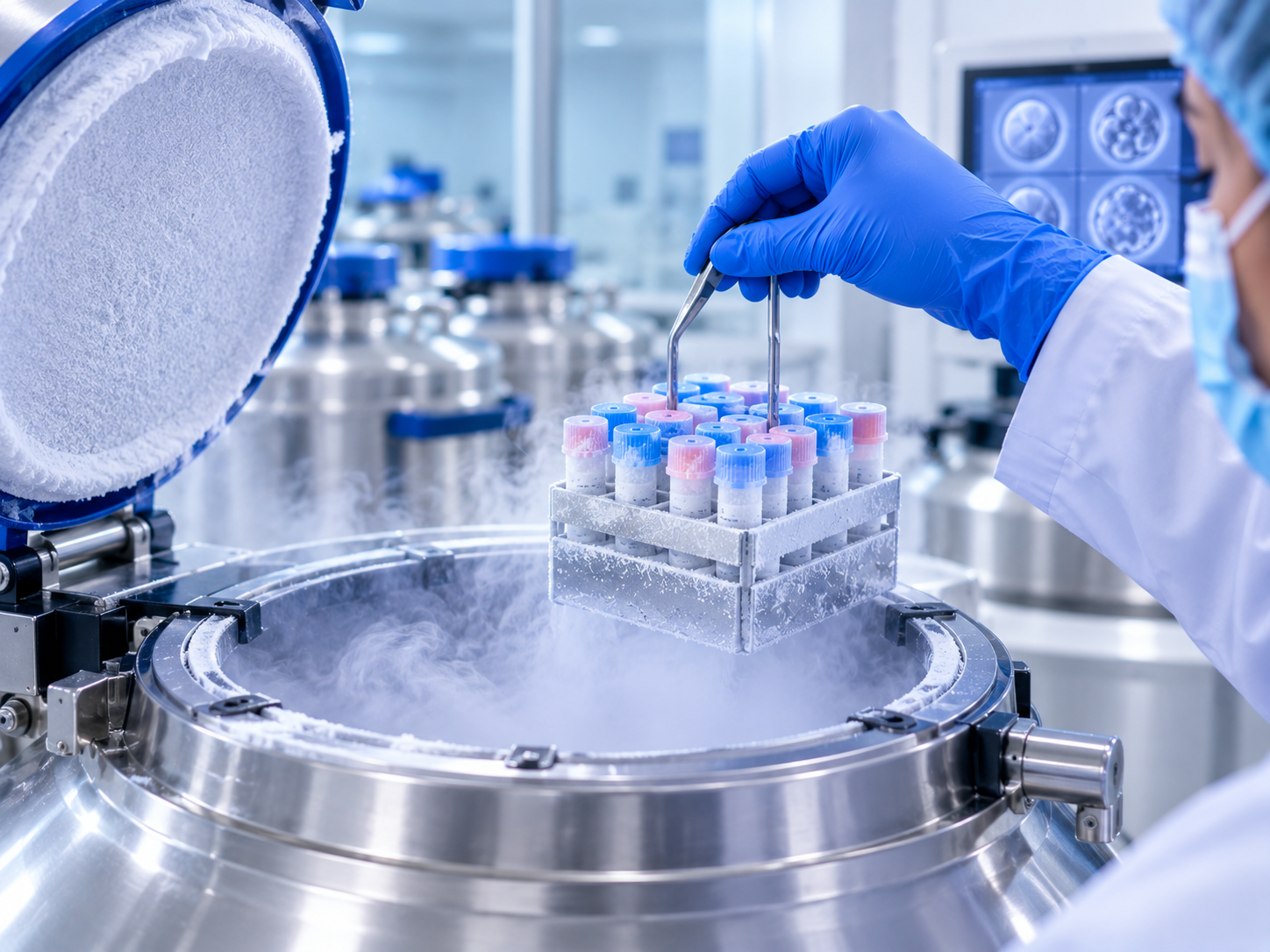
Selected embryos undergo vitrification — an ultra-rapid freezing technique that cools them to -196°C within minutes, preventing ice crystal formation and preserving cell structure.
Secure Cryostorage
Vitrified embryos are labelled, catalogued, and stored in secure, temperature-monitored cryotanks at Sanjeevini Hospital, with routine quality checks and safety audits.
Ready for Future Transfer
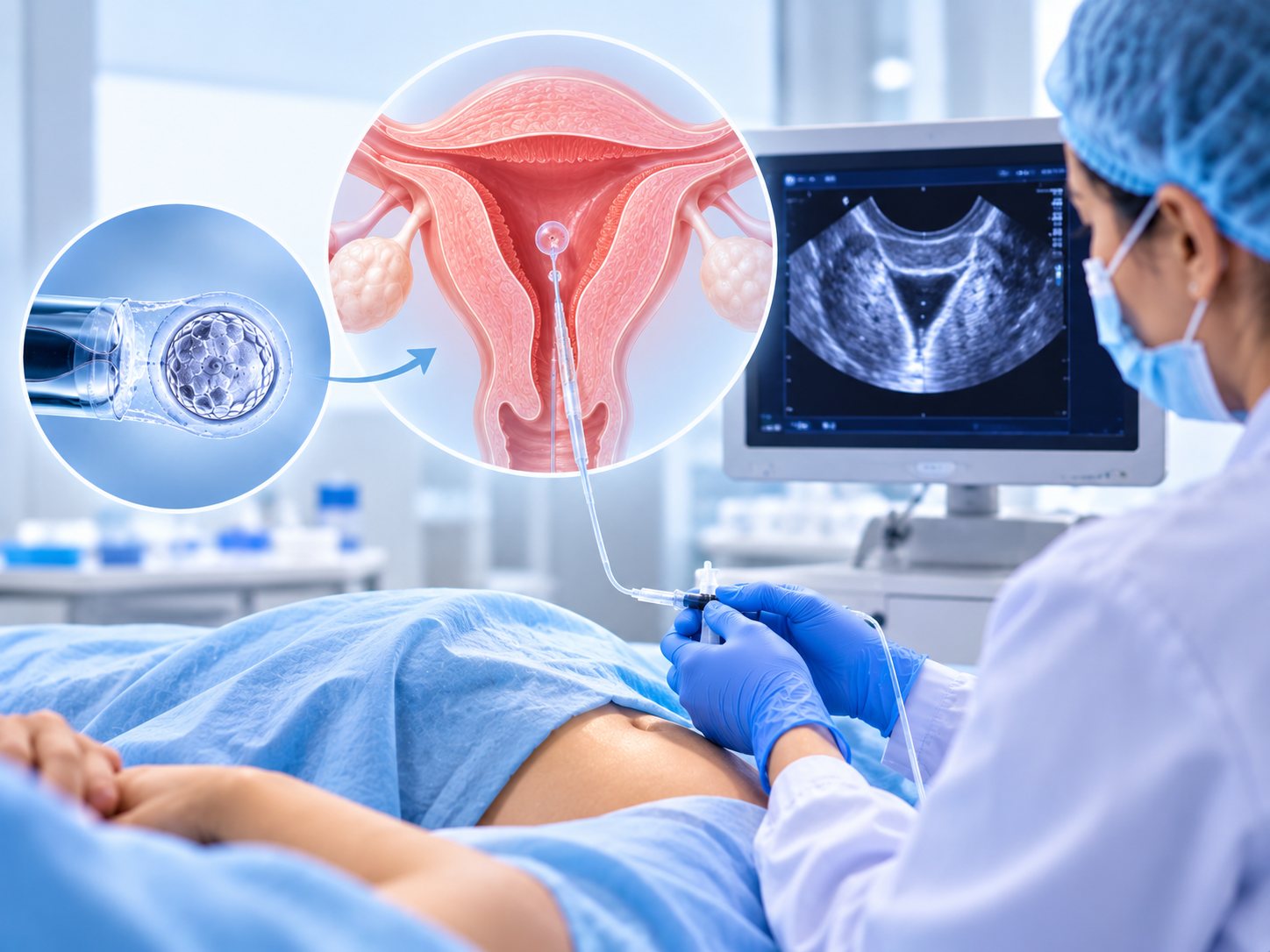
When you're ready, frozen embryos can be thawed and transferred in a monitored frozen embryo transfer (FET) cycle, timed to your body's natural or medicated cycle.
Using Frozen Embryos Later
Whenever you're ready to proceed, our team will guide you through thawing and frozen embryo transfer (FET) with the same care and precision we provided during freezing.
- Cycle Preparation: Your uterine lining is prepared, either naturally or with medication, to optimise conditions for implantation.
- Thawing: The selected embryo is carefully warmed using a validated laboratory protocol on the day of transfer.
- Frozen Embryo Transfer (FET): The thawed embryo is transferred into the uterus in a quick, painless outpatient procedure.
- Pregnancy Testing: A blood test around two weeks after transfer confirms whether implantation was successful.
- Ongoing Support: Our fertility team continues to support you through early pregnancy monitoring.
Frequently Asked Questions
The most common questions patients ask about embryo freezing and frozen embryo transfer at Sanjeevini Hospital.
Ready to Talk to a Fertility Specialist?
Book a confidential consultation at Sanjeevini Hospital to understand if embryo freezing is right for you.
Book a Consultation