
Sanjeevini Maternity & Fertility Centre ICSI Treatment in Raichur
"Looking for ICSI treatment in Raichur? Our fertility specialist dr apoorva Treated the ICSI . Intracytoplasmic Sperm Injection (ICSI) is an advanced laboratory technique used alongside IVF, in which a single, healthy sperm is injected directly into the centre of an egg using a fine glass needle — rather than leaving fertilization to happen on its own.
ICSI is especially valuable when sperm quality, count or movement makes natural fertilization unlikely, giving couples a far better chance of achieving fertilization even in cases of severe male-factor infertility.
At Sanjeevini,Our embryology team performs ICSI under a high-precision microscope, with every embryo carefully monitored and graded before transfer.
1 Sperm
Injected directly into each egg
High-Precision
Microscope-guided lab procedure
Severe Cases
Ideal for male-factor infertility
Combined
Performed as part of an IVF cycle
How treatment works, step by step
ICSI follows the same overall IVF pathway, with one key difference at the fertilization stage. Here's what to expect.
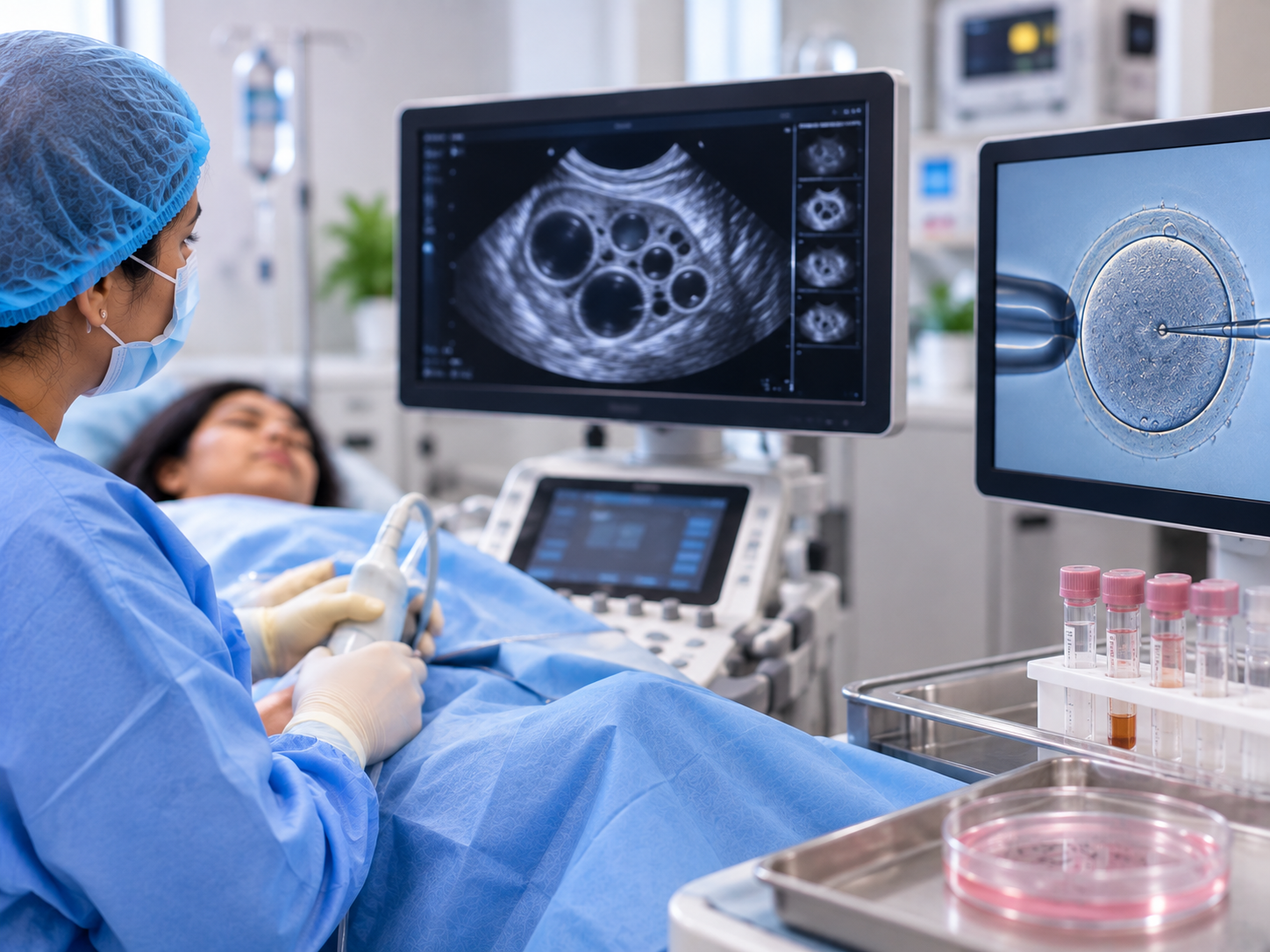
injection / follicle scan
Ovarian Stimulation & Egg Retrieval
Growing and collecting eggs
Hormone injections stimulate multiple egg follicles, tracked with regular ultrasounds. Once mature, eggs are retrieved under light sedation in a short outpatient procedure.
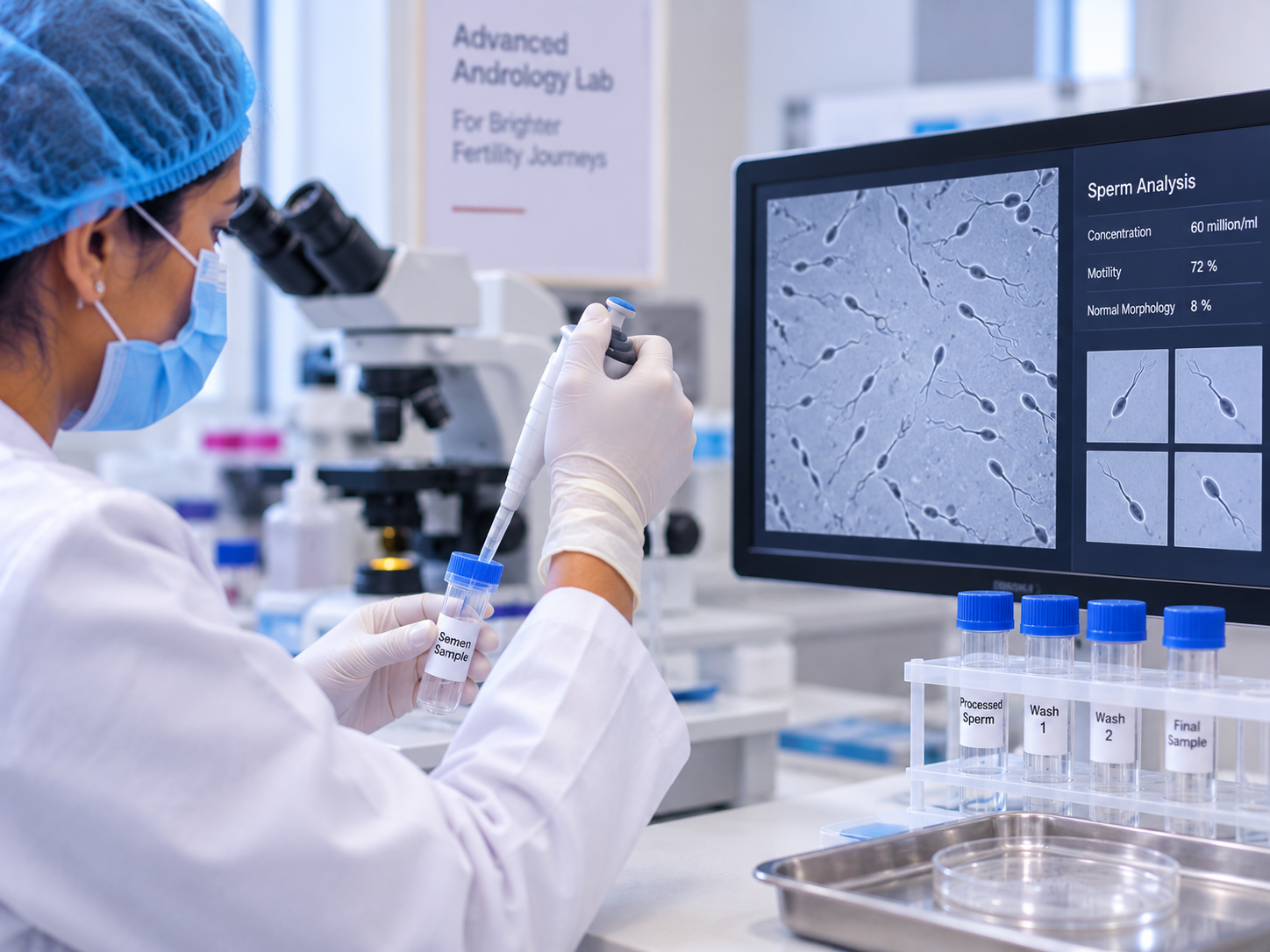
lab sperm preparation
Sperm Selection & Preparation
Choosing the healthiest sperm
Our embryologists examine the sperm sample under high magnification to select the single healthiest, most active sperm for injection into each mature egg.
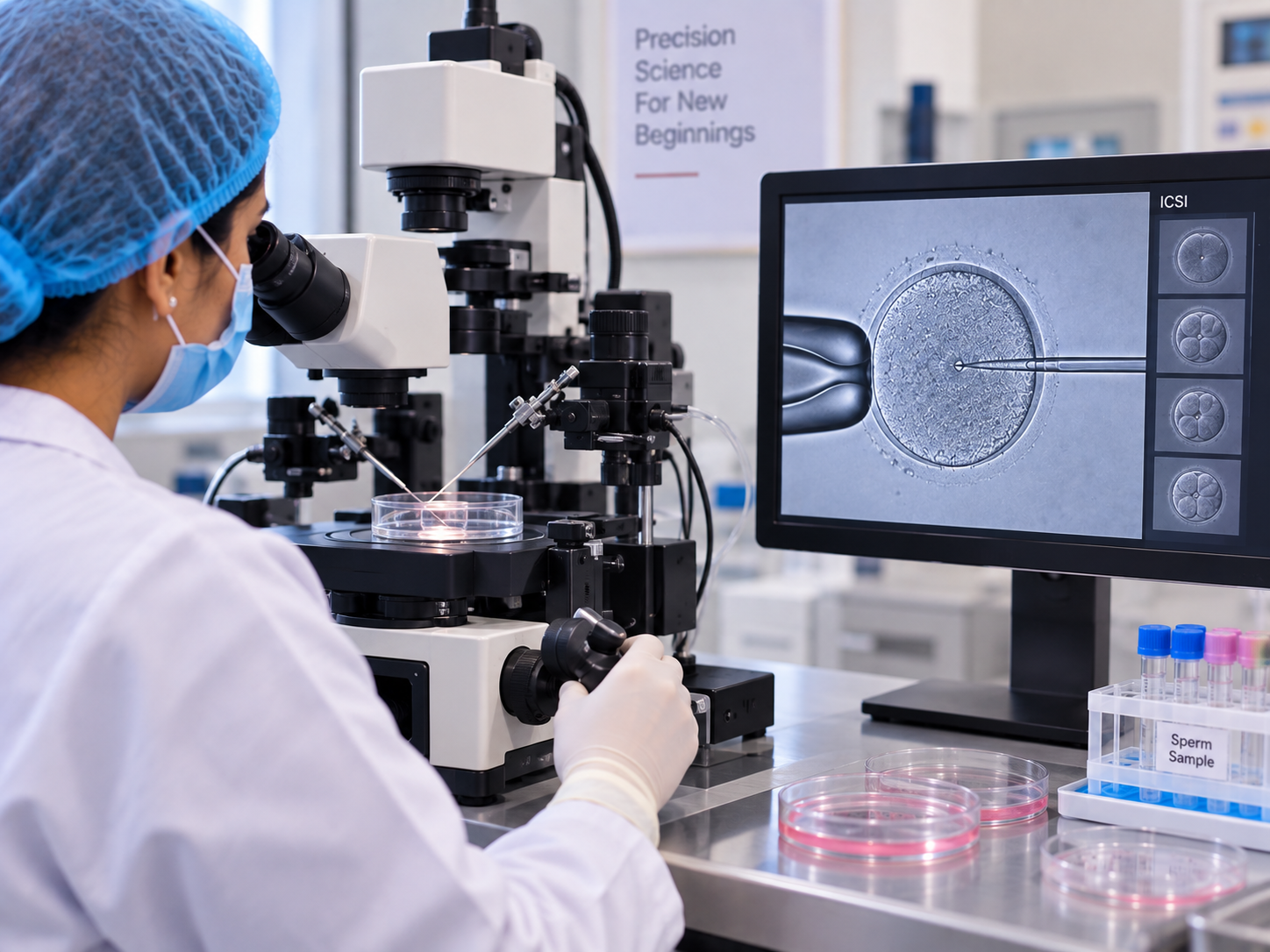
microscope / injection procedure
The ICSI Procedure
Direct sperm injection
Using a fine glass needle under a high-precision microscope, a single sperm is injected directly into the centre of each mature egg to achieve fertilization.
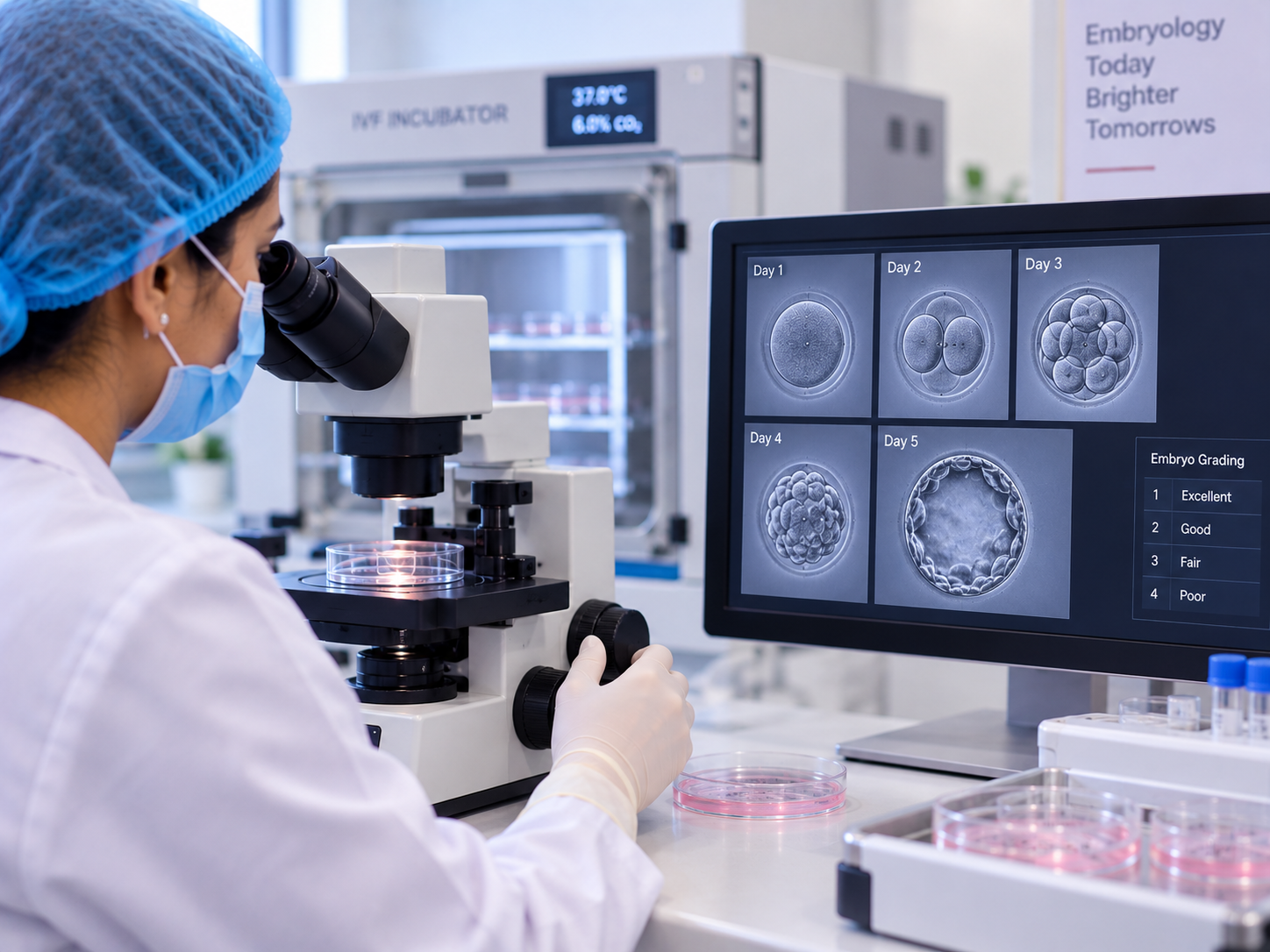
embryology lab / incubator
Embryo Culture & Grading
Watching embryos grow
Fertilized eggs are cultured in the lab for 3–5 days, with our embryologists grading each embryo daily to identify the strongest candidates for transfer.
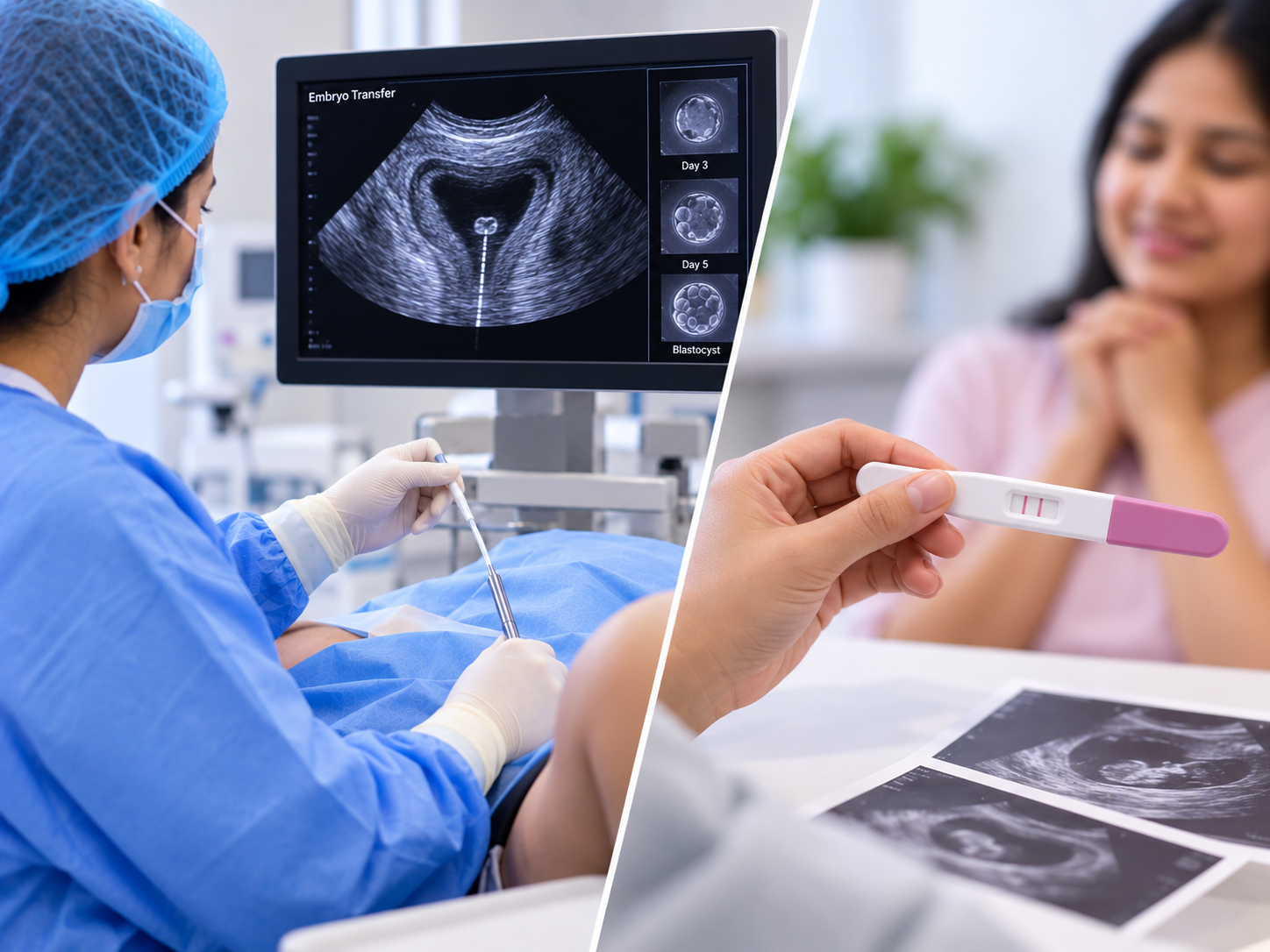
embryo transfer / test result
Embryo Transfer & Pregnancy Test
Completing the cycle
The healthiest embryo is transferred into the uterus in a short, painless procedure, followed by a beta hCG blood test around 14 days later to confirm pregnancy.
Is ICSI right for you?
ICSI is typically recommended when standard IVF fertilization is unlikely to succeed on its own. Common situations include:
Severe Male Factor Infertility
Very low sperm count, poor motility or abnormal shape that makes natural fertilization unlikely.
Previous Fertilization Failure
When eggs failed to fertilize with conventional IVF in a prior cycle, ICSI significantly improves the odds.
Surgically Retrieved Sperm
When sperm is retrieved directly from the testicle or epididymis, ICSI is needed to achieve fertilization.
Unexplained Fertilization Failure
When eggs and sperm both appear normal but fertilization still doesn't occur naturally in the lab.
Frozen Sperm or Eggs
Frozen-thawed sperm or donor eggs often have lower natural fertilization rates, where ICSI helps.
Planning Genetic Testing (PGT)
When embryos will undergo genetic testing, ICSI is preferred to avoid contamination from extra sperm cells.
Talk to us about ICSI treatment
Book a one-on-one consultation with Dr. Vasundhari M.J. and find out if ICSI is the right path to help you conceive.
Call us: 080-71968484 / 080-67417889