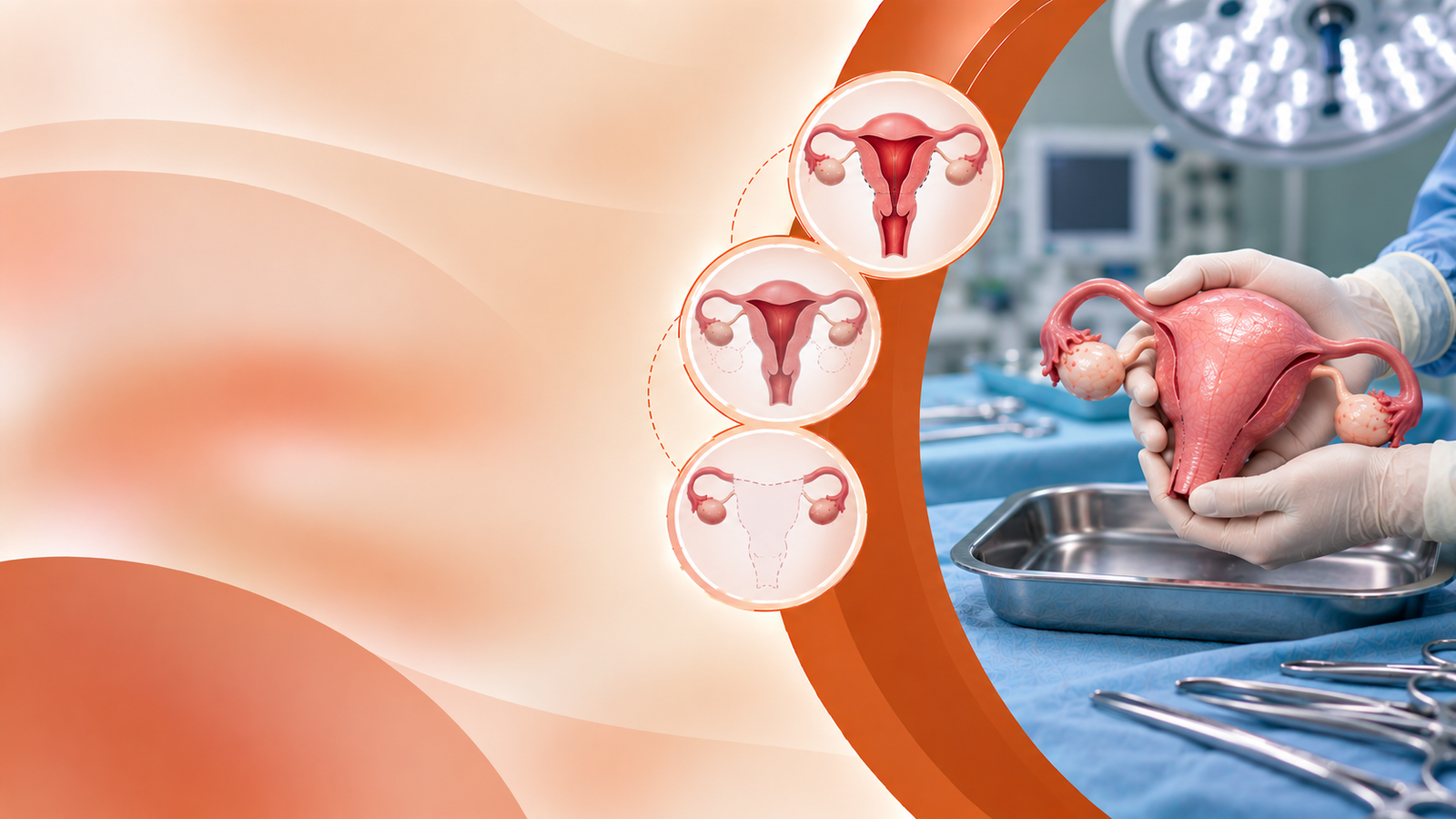
Myomectomy for Uterine Fibroids — Fertility-Preserving Care
A surgical procedure that removes fibroids while preserving your uterus — expert care from Dr. Vasundhari and Dr. Apoorva at Sanjeevini Maternity & Fertility Centre, Raichur.
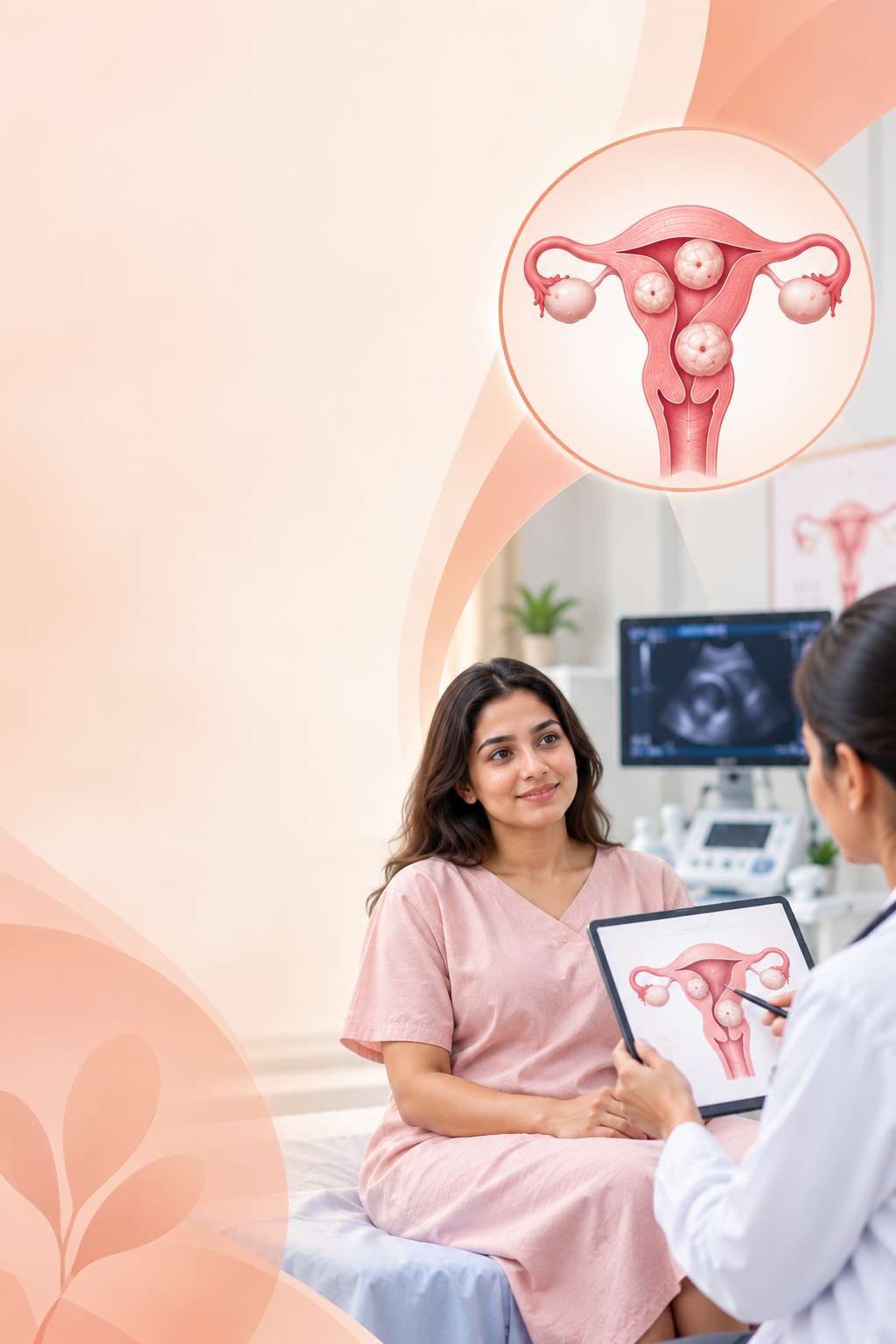
A surgery that removes fibroids, not your uterus
Myomectomy is a surgical procedure that removes uterine fibroids (non-cancerous growths in the muscle wall of the uterus) while preserving the uterus itself. This makes it the preferred option for women who wish to retain fertility or simply keep their uterus intact.
Depending on the size, number and location of your fibroids, our specialists recommend the least invasive approach that safely and completely removes the growths — abdominal, laparoscopic or hysteroscopic — restoring comfort and, where relevant, reproductive potential.
When Might Myomectomy Be Recommended?
Your specialist may suggest myomectomy if fibroids are causing any of the following.
Heavy or Prolonged Bleeding
Periods heavy enough to cause anaemia, or bleeding that lasts significantly longer than usual each cycle.
Pelvic Pain or Pressure
Persistent pelvic discomfort, a feeling of fullness, or pain during intercourse caused by fibroid growth.
Frequent Urination
Large fibroids pressing on the bladder can cause a frequent urge to urinate or a sense of incomplete emptying.
Fertility Concerns
Fibroids distorting the uterine cavity can interfere with conception or contribute to recurrent pregnancy loss.
Rapidly Growing Fibroids
Fibroids that are enlarging quickly on imaging, or are large enough to warrant surgical removal.
Wanting to Preserve Fertility
When medication hasn't helped and you wish to conceive in future, myomectomy removes fibroids while keeping the uterus.
Types of Myomectomy
The right surgical approach depends on the size, number and location of your fibroids.
Abdominal Myomectomy
An open surgical approach through an abdominal incision, best suited for large, numerous, or deeply embedded fibroids.
- Ideal for large or multiple fibroids
- Direct access for complex removal
- Longer recovery than minimally invasive options
Laparoscopic Myomectomy
Performed through small incisions using a camera and specialised instruments, removing fibroids from the outer uterine wall.
- Smaller scars, less blood loss
- Shorter hospital stay
- Faster return to daily activities
Hysteroscopic Myomectomy
Fibroids located inside the uterine cavity are removed through the vagina and cervix using a hysteroscope, with no external incision.
- Best for cavity-distorting fibroids
- No abdominal incision needed
- Same-day or short-stay procedure
Your Myomectomy Journey & Recovery
From first consultation to full recovery, here's how we guide you through every step.
Consultation & Diagnosis
A detailed examination, ultrasound and, if needed, MRI to map the size, number and location of your fibroids and decide the safest surgical approach.
Pre-Surgical Preparation
Blood tests, anaesthesia fitness checks and, in some cases, medication to shrink fibroids before surgery for a smoother procedure.
The Surgery
Performed under anaesthesia using the approach best suited to your case — abdominal, laparoscopic or hysteroscopic — typically lasting one to three hours.
Hospital Stay
1–3 days of monitoring for open or laparoscopic myomectomy; hysteroscopic procedures may allow same-day discharge.
Recovery at Home
Most women resume light activity within 1–2 weeks and full activity within 4–6 weeks, depending on the surgical approach used.
Follow-Up Care
Scheduled reviews to confirm healing, discuss future pregnancy planning if relevant, and monitor for fibroid recurrence.
Our Specialists
Experienced surgeons committed to safe, fertility-conscious fibroid treatment.

Dr. Vasundhari M.J.
MBBS, DGO · KMC 27763Specialist gynecologist with extensive experience in fibroid diagnosis and both open and minimally invasive myomectomy procedures.

Dr. Apoorva P.
MS OBG, FRM · KMC 121086Trained in reproductive medicine and minimally invasive gynecologic surgery, focused on fertility-preserving fibroid treatment.